Ukraine Takes Over German Nuclear Power Plants

By Correspondents André Visuel-Credable in Potsdam and Vasili Dbrznvkovitz in Regensburg, Germany

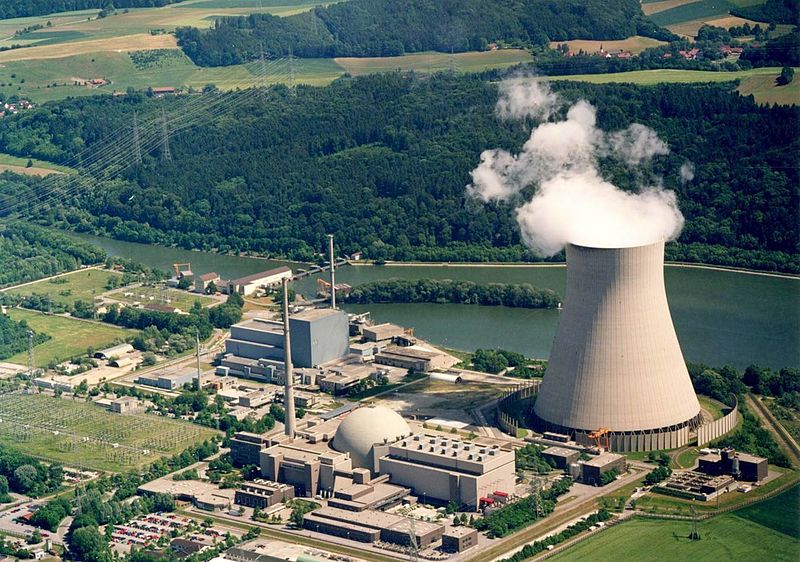
Germans are waking up to a surprise this Easter Monday to find Ukrainian flags at the gates and perimeters of Germany’s three remaining, operational nuclear power plants.

It’s unclear if Ukraine’s freshly-trained troops exploited the quiet weekend on the roads to deploy to the plants in Southern and North-West Germany or if “sleeper cells” had been called into action to take charge of the power plants.

While official comments from Germany’s and Ukraine’s are yet to be issued, foreign policy experts who could be reached for comment at the early hour understand that the annexation of territories may be a consequence of German cabinet Minister Robert Habeck’s visit to Ukraine to discuss aid for Ukraine’s post-war reconstruction. Habeck had declared that it was OK for Ukraine’s existing nuclear power plants to continue operations indefinitely, as long as it was safe.

There is speculation that Ukraine’s leader Volodymyr Zelenskyy may have interpreted Habeck’s comments in the context of German Foreign Minister Annalena Baerbock’s previous declaration that “the wishes of the German people are secondary to the territorial integrity of Ukraine”.

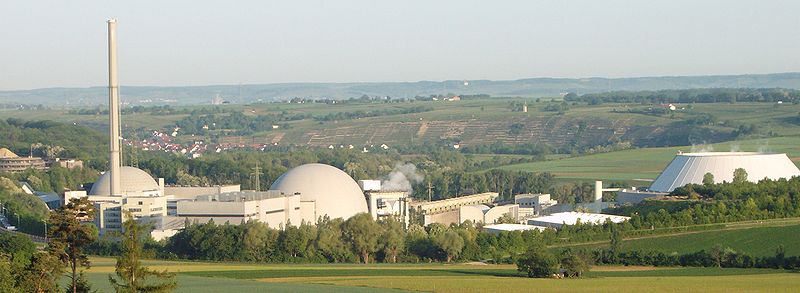
Neckarwestheim
Neckarwestheim
Isar
Isar
Emsland
Emsland

Images via Wikipedia.

Germany’s Bundeswehr is unable to deploy within the country’s borders and the Bundespolizei (Federal Police) is yet to receive specific orders. Escalation to military action may be perceived by foreign powers as Germany shifting its allegiances to Russia.

Meanwhile, the State Police in Baden-Württemberg, Bavaria and Lower Saxony have been called out to preserve the peace around the plants. Access roads have been blocked and the perimeters are being patrolled with only power plant personnel and services allowed to pass.

No plant personnel were prepared to be interviewed.

The reactions of other early risers in the areas have ranged from alarm to bemusement. Of the half-dozen or so others at the sites, only one was prepared to comment beyond courtesies.

Dog walker, a refugee from Ukraine, Ludmila C., staying with a family at a farm outside of Lingen, said that she’d spotted the flag at the gatehouse while she was walking her host’s Doberman around the perimeter of the plant. As she approached to those in the gatehouse, wishing them a Happy Easter in Ukrainian, she was suddenly accosted by local Police and bundled into a van, taken hundreds of metres away and ordered to remain at least 100 metres from the perimeter fence. The dog absconded.

Locals are advised that the now bilingual Doberman, named Blümchen, is quite friendly. Ludmila expects Blümchen to return home of its own accord for breakfast, having sniffed all the interesting fence posts.

South Australia’s New Vehicle Number Plates

By Melbourne, Australia correspondent Angelina Dawn Summers-Winter

Application of the latest technology in vehicle number plates is to see first light in South Australia starting from the 14th of November, 2017.

Unlike previous embossed number plates, these ones will be made from a composite laminate incorporating a luminous layer, removing the need to have the number plate illuminated at night. The technology for laminating the luminous layer is proprietary and number plates using the TritiumFilm™ technology will initially be manufactured in Japan by a small startup company operating in the Fukushima Prefecture, extracting the vital Tritium from sea water using the now-obsolete ALPS plant at the disused reactor site.

Another enhancement is to employ the German DIN-1451, falsification-resistant font for the vehicle registration number, making it nearly impossible to alter the plate to try to frustrate South Australia’s number plate recognition systems to be installed in increasing numbers, starting before the Christmas break. Point-to-point speed cameras are playing an increased role in the State’s budget; but drivers must simply obey the rules if they wish to avoid the higher fines for next year; to be detailed next month..

SA-Darkness

Continue reading

Merkel’s North Sea “Alcatraz” for Refugees

hochseeinsel_helgoland

Heligoland – 50km from German mainland

By Berlin, Germany correspondent D. Wolfgang Spitz-Bubel reporting from Frankfurt/Main

Frankfurt-based refugee advocates medico international have received a copy of a top secret analysis by German Chancellor Merkel’s government to incarcerate thousands of “problematic” refugees offshore to a detention camp on the isolated Heligoland Islands in the North Sea.

The total land area of Heligoland is just 1 km², the weather is often unfriendly and the surrounding waters of the North Sea; treacherous.

Continue reading

Basslink to Become Bassland

By Canberra, Australia correspondent Erica Quarterbee on assignment in Launceston

Australian experts have been scratching their heads on how to fix the electrical power link between Tasmania and the mainland since it failed in December but a permanent solution may be at hand from the opposite side of the planet. The Basslink undersea cable has been problematic from the outset and finally failed shortly after Tasmania’s hydroelectric generators tried to use the link to export electrical power to the mainland.

10404379_10206386763009277_2722217874994688879_n

Sweden’s Vattenfall is proposing a sustainable solution that will provide Australia’s eastern seaboard with reliable, baseload, renewable energy capacity.

Bass Strait is a relatively narrow, shallow sea passage that separates Tasmania from the mainland by a few kilometres. It is infamous for its rough seas and high winds.

Vattenfall propose to exploit its experience in wind and hydro-power, deploying a chain of wind turbines, wave, tidal and pumped storage within Bass Strait. The ambitious plan is to build two land-bridges joining Cape Otway in Victoria to Cape Grim in Tasmania, via King and smaller Islands to the East; and Wilsons Promontory in Victoria to Cape Portland in Tasmania, via Flinders, Cape Barren and minor islands. Continue reading

600,000 Migrants “Disappear” in Germany

By Berlin, Germany correspondent D. Wolfgang Spitz-Bubel

German and other European press are starting to report that nearly half the recent migrants registered into Germany have disappeared without a trace. Earlier reports didn’t reveal the extent of the problem. While it’s possible that a few thousand of the more than a million recent migrants could go missing simply due to bureaucratic accidents, the scale of the disappearances suggests that a system has been created to move the migrants on.
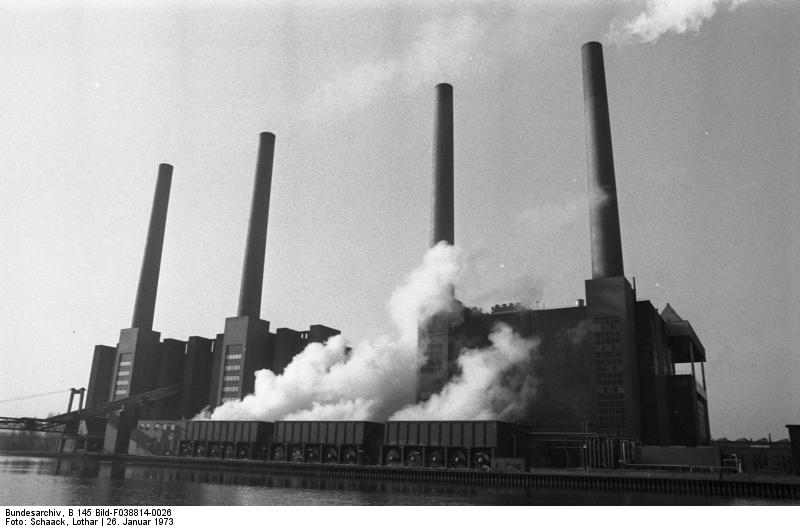
Wolfsburg, VW Autowerk, Kraftwerk

Continue reading

Australia Seeks Chief Engineer

By Canberra, Australia correspondent Erica Quarterbee

A draft advertisement for the position of Chief Engineer is circulating through the corridors of power in Canberra.

Bureau of the Chief Engineer AustraliaThe Chief Engineer is to run an independent Bureau to advise on policies relating to technologies and to audit spending on infrastructure and deployment of technologies within all of government. The Bureau of the Chief Engineer will operate as an independent, professional, “corporate consultancy and inspectorate” to the Prime Minister and Cabinet.

Australia has lacked a Science Minister since the installation of the current government. It’s understood that the Prime Minister’s Office wants to install a permanent mechanism by employing independent professionals who are able to interpret the science and technology for relevance and effectiveness.

Continue reading

PM Abbott Announces Team Aussie-COP21 for Paris

By Australian correspondents Erica Quarterbee and Jennie Drimmof.

Greg Hunt

Greg Hunt

Australia’s Prime Minister Tony Abbott MP BEc LLB MA has instructed the Minister for the Environment, Greg Hunt MP BA LLB MA to form the best possible team to represent Australia at the IPCC Olympics later this year, culminating in the COP21 Games in Paris.

A total budget allocation of $412,786.24 means that the Minister has had to cut some corners in terms of team numbers, travel and accommodation arrangements. The budget has to stretch to 2 sets of games, the 4-day UN-FCCC ADP preliminaries in Bonn, Germany in mid-October and then the 14-day finals in Paris, France starting at the end of November. Continue reading

Tap into TEPZILLA

By Yokohama, Japan correspondent Ishni Sunshi

Just over 4 years after the nuclear disaster at the Fukushima Daiichi and its cash-strapped owner TEPCO has spun off a marketing division to start selling its low-radiation water from its 300,000 tonne stockpile of ALPS-treated water under the TEPZILLA brand. While TEPCO isn’t permitted to dump the purified water into the rather more radioactive ocean, the treated water meets all the requirements of safe bottled water for human consumption.
Continue reading

Canadian Refugees Frozen in Wisconsin

By Milwaukee, Wisconsin, USA correspondent Laverne Kosnowski

Spring brought a few surprises to Manitowoc residents returning across the ice on Lake Michigan last month. The rapid approach of the winter seems to have outrun a few polar bears that’ve been found in the ice by residents digging down to the front doors of their houses through up to 10 feet of snow. Continue reading

Turnbull Turns on Aunty

By Sydney, Australia correspondent Jennie Drimmof

Lissajous-Figur_1_zu_3_(Oszilloskop)

Image from Wikipedia

Less juice for thin Lissie.
The now former Friend of the ABC, Communications Minister Malcolm Turnbull last night announced a halving of the ABC’s budget over 3 years. Mr Turnbull said community feedback has strongly shown that the national broadcaster, the Australian Broadcasting Corporation, was delivering much more than what the taxpayers should be paying for and using taxes to compete against private operators in radio, TV and online. Continue reading